
What a NAP check is
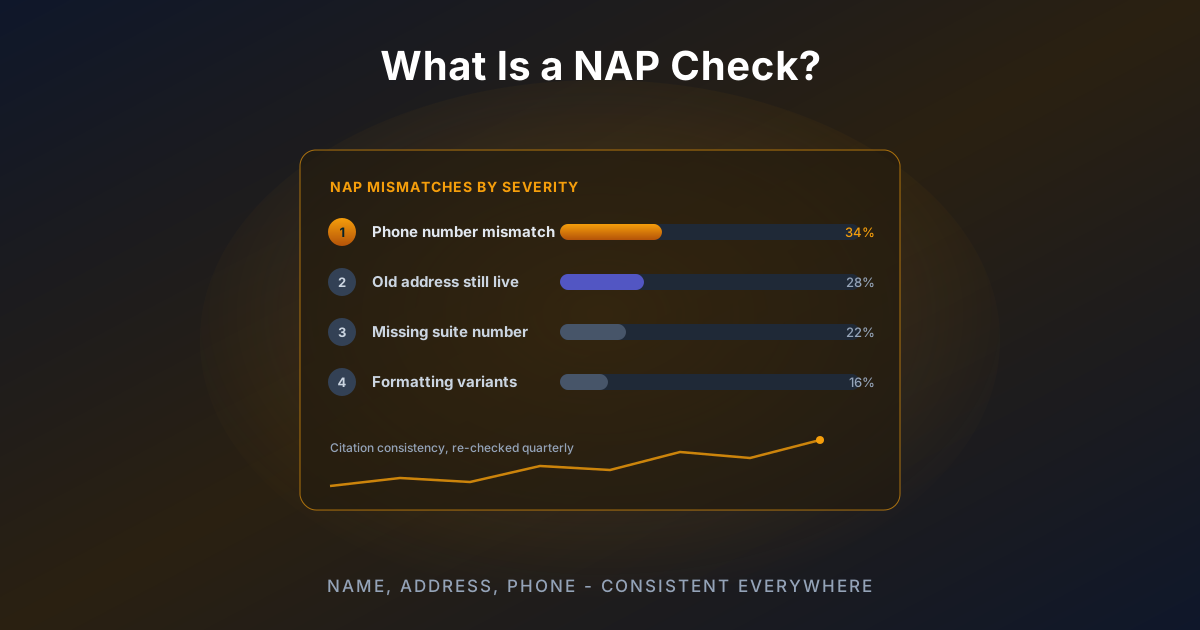
NAP stands for Name, Address, Phone number - the three pieces of information that identify a physical business online. A NAP check is the process of verifying that those three details are identical everywhere they appear: your website, Google Business Profile, Apple Maps, Bing Places, Yelp, industry directories, chamber listings, social profiles, and every aggregator that has scraped you along the way.
It sounds trivial. It is not, because businesses accumulate variants without noticing:
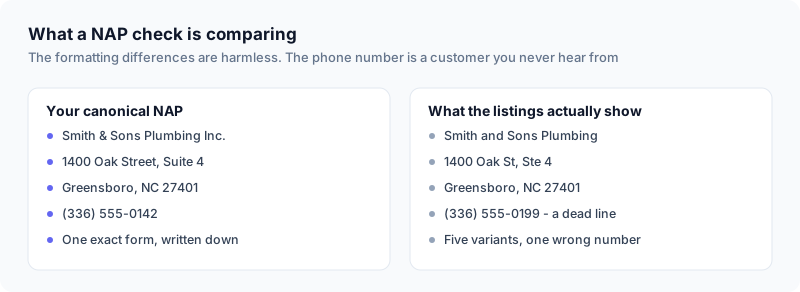
- "Suite 4" on one listing, "Ste 4" on another, "#4" on a third
- An old phone number surviving on a directory nobody remembers submitting to
- "Smith & Sons Plumbing" versus "Smith and Sons Plumbing Inc."
- A tracking number on the website that does not match the real line anywhere else
- An address that changed in 2023 and is still live on eleven aggregators
Each one is small. Collectively they are the reason a business with strong local SEO fundamentals still cannot rank, and now the reason an AI assistant gives out the wrong phone number.
Why this matters more now than it did in 2020
Local SEO people have run NAP audits for a decade because search engines use citation consistency as a corroboration signal: the more independent sources agree on your details, the more confident the engine is that the entity is real and the data is right.
AI assistants raised the stakes in a specific way. A search engine that finds two phone numbers shows both listings and lets the human sort it out. An assistant picks one and states it as fact. No listing, no second option, no visible ambiguity - just an answer.
Which means an inconsistent NAP no longer costs you a ranking position. It costs you a customer who called a disconnected number and never told you.
Worse, the AI assistants read exactly the sources that go stale: directory listings, aggregator databases, old cached pages. If the majority of those agree on your 2023 address, the assistant will confidently give out your 2023 address.
How to run a NAP check
Step 1: define the canonical NAP
Pick one exact form and write it down. This is the version everything else gets measured against, so decide the details explicitly:
- Full legal name or the trading name, including or excluding "Inc" / "LLC"
- Street address, matching the postal service's own formatting for your country
- Suite or unit notation, spelled one way, forever
- One phone number, one format, with or without the country code
The single most common failure of a NAP audit is not having agreed the canonical form first, which turns the whole exercise into an argument about which variant is right.
Step 2: build the citation list
Everywhere your business appears. Start with the obvious - Google Business Profile, Apple Maps, Bing Places, Facebook, Yelp - then search your phone number and your old phone number in quotes to find listings you have forgotten. Aggregators are the ones that bite, because they feed other directories automatically.
Fifty to a hundred and fifty URLs is normal for an established local business.
Step 3: check each one
Fetch each page, read the NAP it displays, and compare to canonical. Flag every mismatch by field, so you know whether you have an address problem or a phone problem - they get fixed in completely different places.
Doing this by hand is the part that kills the project around listing thirty. Our free NAP verification tool does the fetching and comparison automatically: enter the canonical NAP, add the citation URLs, and it extracts what each page actually shows and flags every mismatch. Results save per client and the audit is re-runnable, so you can track cleanup progress rather than starting over.
Step 4: fix in priority order
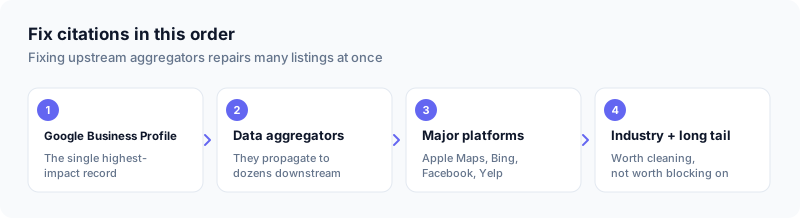
Not all citations carry equal weight:
- Google Business Profile - the single highest-impact record
- Data aggregators - they propagate to dozens of downstream directories, so fixing upstream fixes many at once
- Major platforms - Apple Maps, Bing Places, Facebook, Yelp
- Industry directories - the ones specific to your trade
- The long tail - worth cleaning, not worth blocking on
Step 5: re-check quarterly
Citations rot. Aggregators re-import stale data, directories get bought and merged, and someone eventually adds a new listing with a variant. A NAP check is maintenance, not a project.
What counts as a mismatch
Not every difference matters, and treating them all as equal wastes the cleanup budget.
| Difference | Severity | Why |
|---|---|---|
| Different phone number | Critical | Direct lost business |
| Different street address | Critical | Wrong location given out as fact |
| Old address still live | Critical | Actively misleading |
| "Street" vs "St" | Low | Engines normalise this reliably |
| "Suite 4" vs "Ste 4" | Low | Normalised |
| Missing suite number entirely | Medium | Deliverability and confidence |
| "and" vs "&" in the name | Low | Normalised |
| Genuinely different business name | Critical | Reads as a different entity |
Fix critical everywhere. Fix medium on the high-authority listings. Leave low-severity formatting alone unless you are already editing the listing for another reason.
How to check what AI assistants say about you
The NAP check tells you what your citations say. The other half is what the assistants have concluded from them.
Ask ChatGPT, Gemini, Perplexity, and Claude for your business's address and phone number directly, several times each. Then ask for a recommendation in your category and city and see whether you are named at all. If an assistant returns an old address, you now know which citations to prioritise - and you have a before-and-after measurement for the cleanup.
That measurement is what AI brand tracking automates for the ongoing case, and the free GEO audit scores whether your own location pages are structured cleanly enough for an assistant to read them correctly in the first place.
FAQ
What does NAP stand for in SEO?
Name, Address, Phone number - the core identity details of a physical business. NAP consistency means those details are identical across every listing, directory, and profile online.
How often should I run a NAP check?
Quarterly for most businesses, and immediately after any move, rebrand, or phone number change. Citation data decays continuously because aggregators re-import old records.
Does NAP consistency still matter in 2026?
More than it did, because AI assistants state a single answer rather than showing competing listings. An inconsistent NAP now means an assistant confidently giving a customer the wrong number, with no visible ambiguity for them to notice.
What is a NAP checker tool?
A tool that fetches your citation pages, extracts the name, address, and phone number each one displays, and flags every mismatch against your canonical NAP. Ours is free to use, saves per client, and is re-runnable so you can track cleanup progress.
How many citations does a local business need?
Fewer, cleaner citations beat many inconsistent ones. Cover the major platforms and the aggregators that feed everything else, get them exactly right, then add industry-specific directories. Consistency is the signal; volume alone is not.