
The Big Misconception
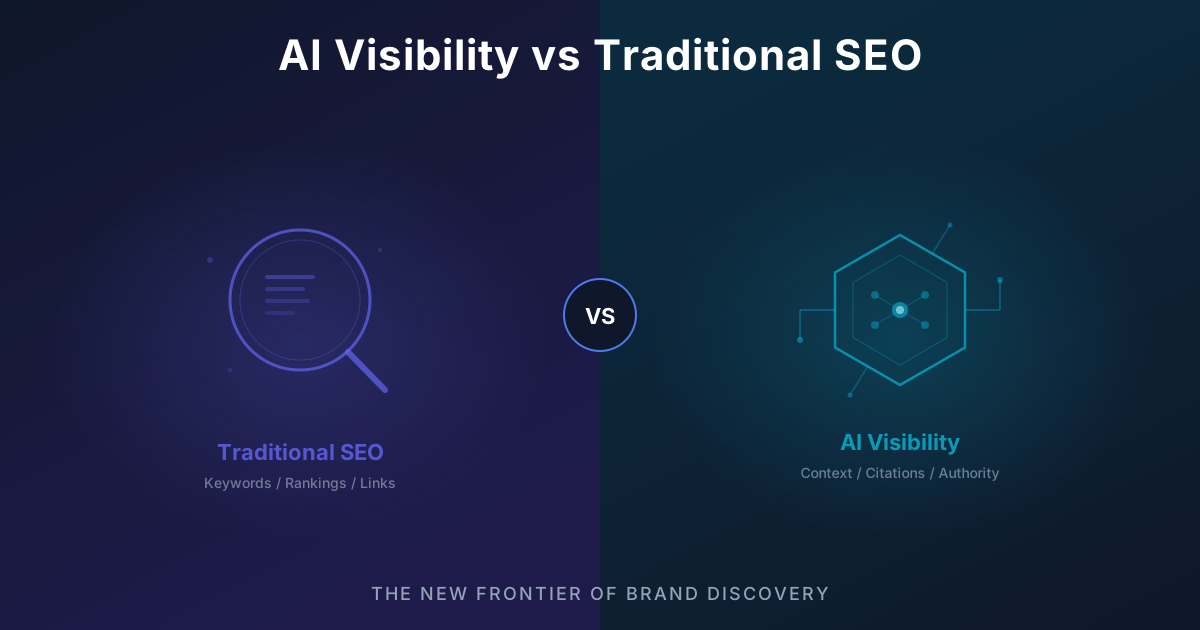
Most marketers assume that if they rank well on Google, they'll automatically appear in AI-generated answers. This is wrong.
We analyzed 500 brands and found that:
- 62% of brands ranking in Google's top 3 are not mentioned by ChatGPT for the same queries
- AI platforms use different ranking signals than Google's algorithm
- Some brands with zero SEO presence are highly recommended by AI
GEO vs SEO: what's the difference?
This gap is why a new discipline emerged: generative engine optimization (GEO), sometimes called answer engine optimization (AEO). The GEO vs SEO distinction is simple:
- SEO (search engine optimization) aims to rank a page in Google's list of blue links so a user clicks through to your site.
- GEO (generative engine optimization) aims to get your brand mentioned, cited, and recommended inside the AI-generated answer itself - on ChatGPT, Perplexity, Gemini, and Google AI Overviews.
GEO does not replace SEO; it sits on top of it. Strong SEO still helps, because many AI engines ground their answers in live search results - but as the data above shows, ranking #1 no longer guarantees you appear in the AI answer. That's the whole reason GEO exists as a separate practice. For the full playbook, see our GEO optimization guide and the answer engine optimization (AEO) guide.
How Google Search Works vs How AI Works
Google Search
- Crawls and indexes web pages
- Ranks based on keywords, backlinks, page speed, etc.
- Shows 10 results per page
- User clicks through to your website
AI Platforms (ChatGPT, Perplexity, Claude, etc.)
- Trained on massive datasets of web content
- Generates a single synthesized answer
- May or may not mention your brand
- User gets the answer without visiting your site
This fundamental difference means your entire optimization strategy needs to change.
What AI Platforms Actually Look For
Based on our analysis of thousands of AI responses, here's what increases your chances of being mentioned:
1. Brand Mentions Across the Web
AI models learn from seeing your brand name mentioned frequently in authoritative contexts. The more high-quality mentions, the more likely AI will reference you.
2. Review Volume and Quality
AI heavily weighs review signals. Brands with consistent 4+ star ratings across multiple platforms (Google, Yelp, G2, Trustpilot) get recommended more often.
3. Content Authority (E-E-A-T)
AI models favor content that demonstrates:
- Experience: First-hand knowledge
- Expertise: Deep domain knowledge
- Authoritativeness: Industry recognition
- Trustworthiness: Accurate, verified information
4. Structured Data
Schema.org markup helps AI understand your business. Implement:
- Organization schema
- Product/Service schema
- FAQ schema
- Review schema
How to Track AI Visibility
Unlike SEO where you can check Google Search Console, AI visibility requires a different approach:
- Query AI platforms with your target questions
- Analyze responses for brand mentions
- Measure Share of Voice (what % mention you vs competitors)
- Track sentiment (positive, neutral, or negative mentions)
- Monitor trends over time
Tools like Livesov automate this process across ChatGPT, Perplexity, Claude, Gemini, and Grok - giving you a unified dashboard to track your AI visibility.
Action Steps
- Audit your current AI visibility - start a free trial
- Compare with your SEO rankings - identify gaps
- Build brand authority beyond Google
- Track both SEO and AI visibility as complementary channels
The brands that win in 2026 will be those that master both traditional SEO and AI visibility.