
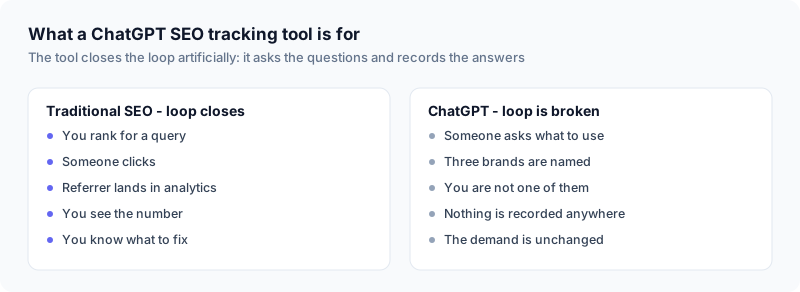
What a ChatGPT SEO tracking tool is for
Traditional SEO tools measure a channel that reports back. You rank, someone clicks, the referrer lands in analytics, and the loop closes. ChatGPT breaks the loop while keeping the demand. Hundreds of millions of people a week ask it what to use, it names three options, and if you are not one of them nothing anywhere in your stack records that it happened.
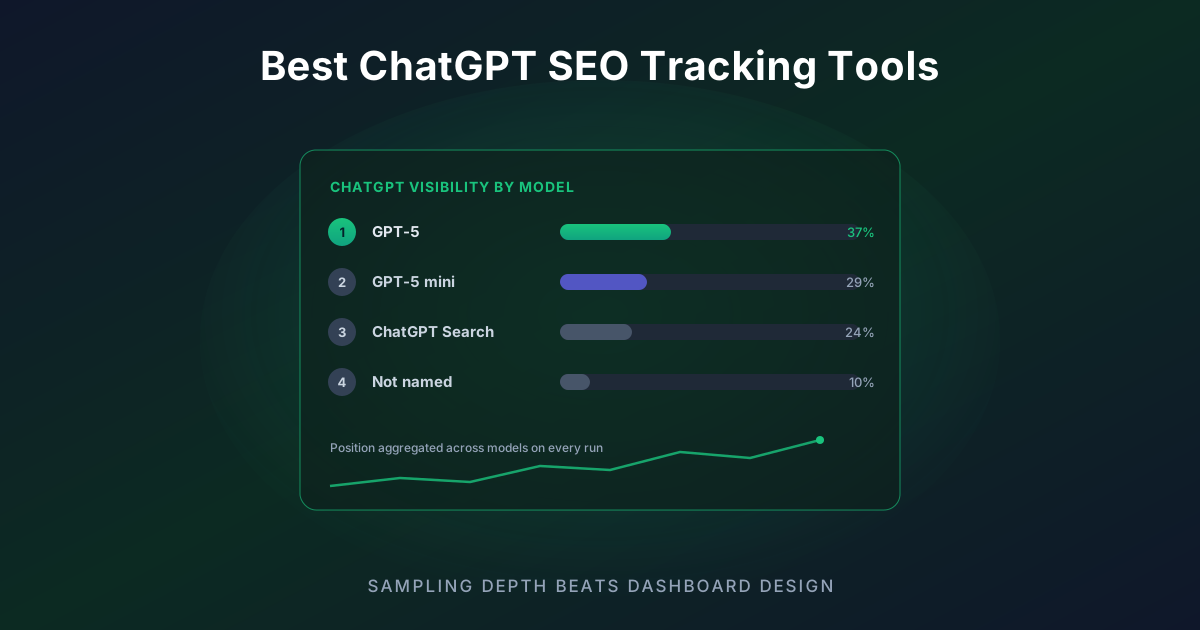
A ChatGPT SEO tracking tool closes that loop artificially: it asks the questions your buyers ask, on a schedule, and records what comes back. That is the whole category. Everything else - scoring, recommendations, dashboards - is built on top of that one primitive, and a tool that gets the primitive wrong cannot be rescued by the dashboard.
The five things that separate real tools from demos
- Multi-run sampling. ChatGPT is non-deterministic. Same prompt, different answers. Any tool reporting a position from one run is reporting noise with a decimal point on it.
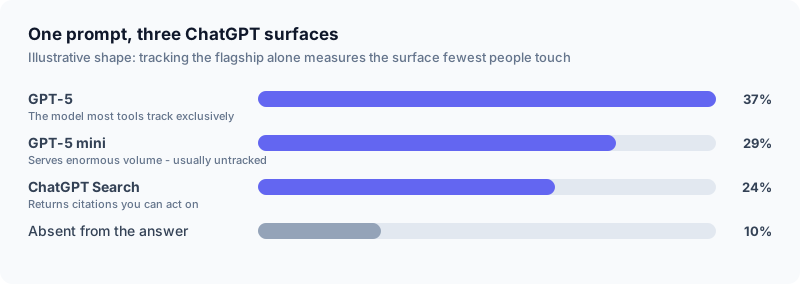
- Model coverage. GPT-5, GPT-5 mini, and ChatGPT Search behave differently, and the smaller models serve enormous volume. A tool that tracks the flagship only is measuring the surface fewest people touch.
- Competitor benchmarking on the same prompt. Your position is meaningless without the field it sits in.
- Stored raw responses. The evidence is the answer text. Without it you have a chart nobody can interrogate.
- Citation capture where it exists. ChatGPT Search returns sources. Those URLs are the most actionable data the engine produces, and plenty of tools discard them.
The tools
Livesov
Tracks ChatGPT across GPT-5, GPT-5 mini and ChatGPT Search on a schedule, with multi-run sampling, sentiment, share of voice, competitor benchmarking against up to 20 rivals, citation capture, and every raw response stored. All five major engines are included on every paid plan from $9/mo, so ChatGPT is not billed separately. 7-day trial, no card. The ChatGPT rank tracker covers the position mechanics; ChatGPT brand tracking covers mentions and sentiment. There is also a free ChatGPT mention checker with no signup.
Profound
The enterprise end of the category: deep coverage, strong reporting, content and automation motions attached, sold through a demo process. Public reports put entry around $99/mo with the substantial tiers well above that. Detail on the Profound alternative page.
Peec AI
Clean product with good reporting, popular with European agencies. Public reports put entry around $100/mo. Check engine inclusion at your tier. See the Peec AI alternative page.
Otterly.ai
Around $29/mo entry for a small prompt allowance, and genuinely differentiated on Google AI Overviews and AI Mode coverage - surfaces most AI trackers skip. If those matter as much to you as ChatGPT does, it earns a look. We say so on the Otterly alternative page.
Semrush and Ahrefs
Both now ship AI visibility modules. If you already pay for one, use it as a first diagnostic - it will tell you whether you have a problem worth solving. It will not give you the sampling depth or citation detail a dedicated tracker does. The honest comparisons are at Livesov vs Semrush and Livesov vs Ahrefs.
The newer cohort
Rankscale, Knowatoa, LLMrefs, Waikay, AthenaHQ and others are all iterating fast on different angles - scoring, prompt discovery, optimisation workflow. Any pricing printed in an article like this goes stale within a quarter, so check their sites and test against the five criteria above.
Test any of them in an afternoon
- Write five prompts a buyer would actually type. Not your brand name. Category, comparison, and problem-led.
- Run them five times each in the tool, and five times each manually. Compare. If the tool is stable while reality is not, it is hiding variance from you.
- Check whether it caught the models. Ask the same prompt of GPT-5 and GPT-5 mini yourself. If your results differ and the tool reports one number with no model breakdown, you are getting an average of things you needed to see separately.
- Export something. Try to get the raw answers out as CSV or PDF. If you cannot, you cannot defend the number later.
- Make a change and wait a cycle. The only real test of a tracker is whether it detects a change you caused on purpose.
What to do once you are tracking
Tracking is not the deliverable. The pattern almost every first measurement produces is high visibility on branded prompts and near-absence on category prompts - visible to people who already know you, invisible to everyone deciding.
The work that moves that number is mostly off your own site. Get accurate current entries on the review platforms in your category, earn coverage in the comparison articles that get cited, keep your documentation clean and factual, and make sure your own pages state plainly what you are and who you are for. Then measure over quarters. Our guide to ranking on ChatGPT covers the tactics; the free GEO audit scores any specific page for citation-readiness.
FAQ
What is the best ChatGPT SEO tracking tool?
The one that samples every model repeatedly on a schedule, benchmarks competitors on identical prompts, captures ChatGPT Search citations, and stores raw answers. Livesov does this from $9/mo (all five engines on Agency); Profound and Peec AI do it at enterprise pricing; Otterly adds Google's AI surfaces. Pick on engine coverage and sampling depth, not dashboard design.
Can I track ChatGPT visibility for free?
For a snapshot, yes - free checkers exist, including our own ChatGPT mention checker with no signup. Continuous tracking is not free anywhere, because every run costs an API call. Livesov's 7-day trial needs no card.
Does ChatGPT SEO tracking show me traffic?
No, and no tool can. AI answers frequently produce no click at all. What tracking shows is presence, position, and share of the answer - measured upstream of the traffic, which is the point.
How is this different from a Google rank tracker?
A Google rank tracker reads a fixed list of ten links. An AI tracker reads a generated answer that changes between runs and across models, and often cites sources rather than ranking pages. Different sampling, different parsing, different metric. See AI visibility vs traditional SEO.
Should I track only ChatGPT?
It is the largest single engine, so it is a defensible starting point - but the spread between engines is usually wider than teams expect, and the engine you are weakest on is often the one your buyers use. The LLM rank tracker view is the cheapest way to find that out before committing your effort.